AI agent development · built for the task, not for a demo

You've already decided you need an agent. Now you need someone to take it to a working state

A demo comes together in a week. A working agent is integrations, a knowledge base, escalation rules, and a month of living on real traffic. We do the second part: we break down your process, lock in the metric before launch, and roll out to live inquiries under your oversight. Code and access are yours from day one. Automation roadmap — ₽0, 14 days. For the fundamentals — what an agent is and how it differs from a chatbot — see our page /en/niches/ii-agenty.html.

Get a free consultation
Automation roadmap before payment
14 days, ₽0, no obligations
Pilot on live traffic
from ₽90,000, metric locked in before launch
Case: consumer bankruptcy
lead loss from 60% to 15%
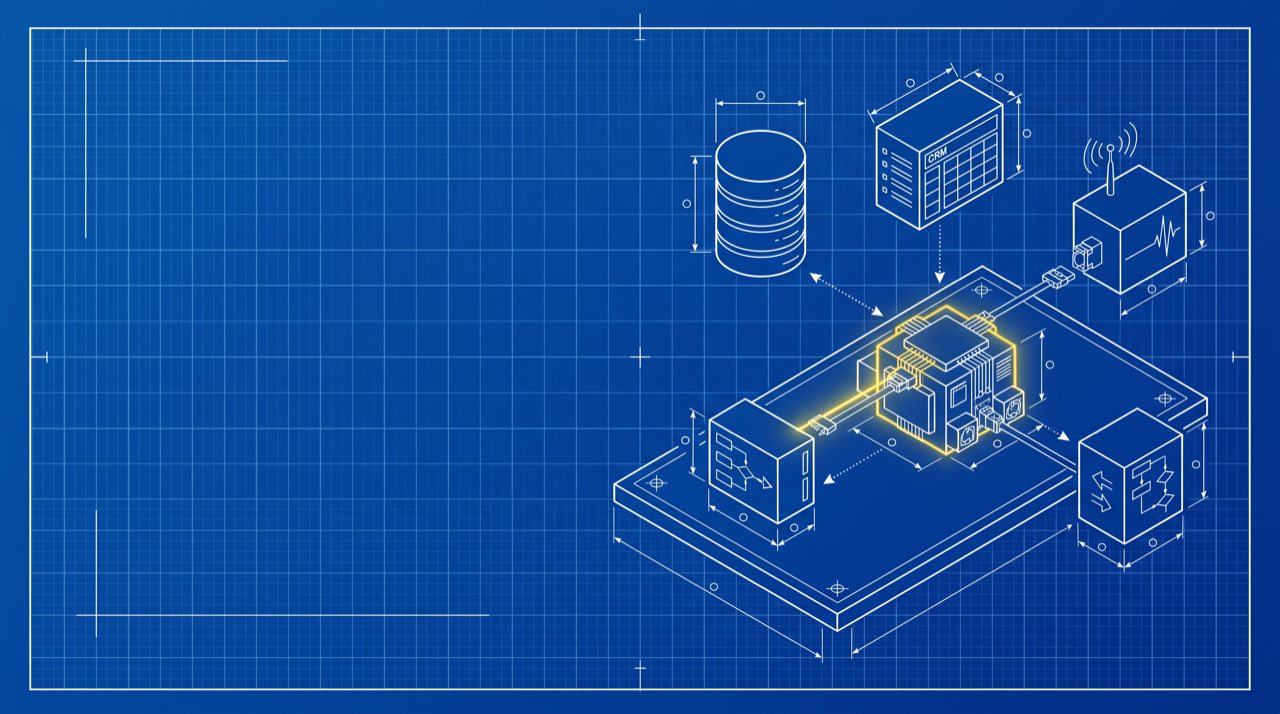
AI agent development · built for the task, not for a demo — implementation diagram
01Sound familiar?

The problem isn't that an agent is hard to write. The problem is that it's hard to finish

The first meeting goes great. The vendor shows a demo: the agent answers questions, phrases things nicely, even cracks a joke. You nod, sign, pay the deposit. A month later it turns out the demo ran on three made-up questions, and on your real inquiries the agent misses the mark — because your company's policies live in people's heads, not in documents, and there was nothing to put in the knowledge base.

Then comes season two. The CRM integration turns out to be "not quite what we discussed": the agent can read the deal card but can't write the result back, because the field has the wrong type and the account lacks permissions. Telephony gets connected "after their support team signs off." Deadlines slip, the deposit is spent, and there's no one left to ask — the team has moved on to the next project.

And then the most expensive part. The agent is technically live, but nobody can say whether things got better. The metric was never locked in before launch, there's nothing to compare against, and the report gets compiled from gut feel. Six months later you're paying for support on a thing you can't prove is making money. And that's the moment a conclusion sets in inside the company: "we tried AI, it didn't work for us" — when what failed wasn't the technology, but the way it was implemented.

02The cost of inaction

How much are you losing while you read this page

Don't calculate "how much development costs" — calculate what the area you're trying to fix already costs you: inquiries waiting until morning, and staff finishing the work by hand. Plug in your own numbers — the calculator will show what it costs per month and per year, and what to weigh the project budget against.

Lost revenue per month per year —

A rough estimate based on your inputs — we calculate exact numbers on a free consultation.

Get this money back
03How it will look

What a project that made it to the finish line looks like

Two weeks in, you have a process map on your desk with the spots marked where a person is doing a machine's job, and the price of each of those spots calculated in rubles. A few weeks after that, the agent is running on live inquiries: you open the log and read any conversation end to end — what the customer asked, what the agent answered, what it wrote into the CRM, where it handed off to a human. The metric you named yourself at the start sits on the dashboard right next to the "before" figure. Your CTO has access to the repository and can review the code. And most of all, you've stopped being the one holding the whole process in your head — it now has an operator that works to the playbook around the clock, consistently.

Now
Setting the task"we need an AI agent," scope and outcome get worked out along the way
What the demo showsa polished conversation on made-up questions
Checking the resultby gut feel, no metric locked in before launch
Who owns the systemcode with the vendor, access with the vendor
With AI
Setting the taska process map with numbers: what's being automated and by how much
What the demo showsthe agent's answers to your real inquiries
Checking the resultmetric locked in before launch, a before/after comparison
Who owns the systemrepository, keys, and accounts registered to you
04How it works

Three steps, and you don't write a single line of code

  1. 01 · Step 1 · 14 days · ₽0

    Automation roadmap and spec

    We break down your process step by step: who does what by hand, how long it takes, and where inquiries and money are being lost. We inventory your systems — CRM, telephony, messengers, warehouse, custom-built tools — and check what has an API and what we'll need to work around. The output is a document: which chains the agent will close completely, which only halfway, where it would just be an expensive toy, and which number needs to move. From you at this stage — access to the process and a couple of hours talking to the people who work in it. From there, the decision is entirely yours, no obligations.

  2. 02 · Step 2 · pilot · from ₽90,000

    One agent for one high-value area

    We take the most valuable piece from the roadmap and build an agent for it: connect your CRM and channels, build a knowledge base from your policies and pricing, and set the boundaries of what it can do and when it hands off to a human. We test it against an archive of your real inquiries — you read the answers and tell us where the agent is wrong, we fix it. Then we launch on live traffic with logging turned on: every conversation and every action in the system is visible to you. The metric is locked in before launch, so there's something to compare against.

  3. 03 · Step 3 · full loop · from ₽250,000

    Connected agents, handover, and ongoing management

    We connect adjacent areas so agents hand the customer off to each other instead of starting from zero. We retrain on accumulated conversations, adjust the playbook as your business changes, and keep monitoring errors and escalations. We hand over documentation, the repository, and access: your team can carry on running the system themselves, with us or without us. The range beyond this depends on the number of areas and the number of connected systems — we calculate it at the roadmap stage, before signing.

05Proof

Inquiries came in around the clock, but development had already been shelved twice before that

Edemium case study · consumer bankruptcy

A law firm handling personal bankruptcy cases. The flow of ad-driven inquiries was steady, cost per lead was known and tolerable, and roughly one in seven inquiries turned into a signed contract.

The problem wasn't sales — it was the arithmetic of time. Someone in debt looks for a solution in the evening and at night — exactly when nobody's in the office. By morning they'd already messaged three other places, and whoever answered first got the conversation. From the outside it looked like "poor sales conversion." In reality, sixty percent of leads were lost before the first live contact.

The owner was skeptical of AI, and for good reason: the topic is sensitive, the person is in crisis, and a wrong answer costs reputation and complaints. The condition he set was strict — the agent answers only from an approved knowledge base, any legal question outside it goes straight to a human, and he personally reads every conversation for the first two weeks.

Development didn't start with code — it started with two weeks of groundwork: we pulled the archive of inquiries, sorted them by type, separately listed the phrasing lawyers signed off on as acceptable, and separately the topics the agent is not allowed to touch. Only then did we build the agent: intake at any hour, a substantive answer within thirty seconds, gathering the details of the person's situation — debt amount, assets, number of creditors — a CRM record with fields filled in, a task assigned to the lawyer, and booking into an open consultation slot. Sensitive or emotionally difficult inquiries it handed off to a live specialist along with a ready-made summary of the conversation.

After two weeks of reading the conversations, the owner dropped the daily oversight on his own. Lead loss before first contact fell from sixty percent to fifteen: what remained were people who wouldn't have continued with a human either. Contract conversion rose from fifteen to thirty-five percent — not because the agent sells better, but because the lawyer was now reaching people who'd already had a substantive conversation. Additional revenue came out to about three million rubles a month, on the same ad budget.

A second project shows the same logic. An industrial equipment vendor — the issue there wasn't overnight inquiries, it was oversight: the owner spot-checked calls and spent three hours a week on it, then made decisions off gut feel. The agent started reviewing chats and calls against a checklist and putting a summary in front of management. Conversion rose 27% in two months, and time spent overseeing the team dropped from ten hours to thirty minutes a week.

"I was afraid a robot would be talking to people in a hard situation. Turns out the worse problem was that nobody was talking to them at all until morning."

Both are real cases; company names are withheld under NDA. Your numbers depend on your current response speed, traffic quality, and how many steps are currently done by hand. We calculate the exact numbers on the automation roadmap, before payment.

06While you're thinking it over

What happens while development stays "on next quarter's roadmap"

Nothing dramatic — and that's the problem. Inquiries don't vanish with a bang, they just stop replying to the second message. Staff don't complain about copying data between windows — they consider it their job. You'll never see a line in the report that says "lost due to slow response": a customer who never came back leaves no trace anywhere except your competitor's numbers. Meanwhile, the barrier to entry for building agents keeps dropping every month, which means the number of companies already underway keeps growing. A year from now, the gap between you and your neighbor won't be measured by model quality — everyone's models are roughly the same — it'll be measured by who has, by then, built up a history of conversations, refined policies, and an agent that already understands their niche. What you'll have to catch up on isn't the technology — it's the accumulated gap in inquiries handled. Putting development off for a quarter costs exactly one quarter of losses on the very area you already consider a problem.

07I know what you're thinking

Honest answers to the biggest doubts

We've already tried this, and the vendor never finished

Most often it breaks at one specific point: the project started with code instead of a description of the process. That's why our first step is always the automation roadmap, and it's free — you see how we work before you've paid a ruble. If after the roadmap you decide to build with someone else, or not at all, the document stays yours: the process is broken down, the losses are calculated, and it states what's needed from your systems. It's a standalone deliverable, not a marketing brochure.

We could build the agent in-house — we have developers

Often you could, and we'll say so directly on the roadmap if that's your case. An in-house team wins on knowing the process and loses on time: an agent isn't a one-off build, it's months of refining policies, reviewing errors, and working the knowledge base — all competing with your team's current dev work. A workable path is running a pilot with us, taking the code and documentation, and carrying on yourselves. We're comfortable with that outcome, because access and the repository are registered to you from the start anyway.

Who owns the code, and what happens if we part ways

The code, knowledge base, prompts, and documentation are yours — the repository is set up under your organization. Accounts with model providers, CRM, and telephony are registered to you, the keys sit with you, and we work off the access you grant. If we part ways, you keep a working system and can hand it to any vendor or your own team. We do the handover with documentation and an architecture walkthrough, not "here's an archive, figure it out."

Our process is too specific — AI won't get it

An agent doesn't guess your specifics — they get built in. It knows exactly what you put into it: your playbooks, pricing, workflow, examples of good conversations, and the boundaries of what it's allowed to say. Outside its knowledge base, it hands off to a human rather than improvising. This gets tested before the pilot: we take your real inquiries from the archive, show you the agent's answers, and you tell us where it's wrong. If your specifics turn out to be something that just can't be captured in text, we'll say so directly and won't take the project.

Our data is a mess — we need to clean it up first

You don't need perfect order, just a minimum: a system where the process actually lives, and material for a knowledge base. If inquiries are tracked in personal chats and nowhere else, then yes — you need basic record-keeping first, or the agent has nothing to work with and no way to measure results. But more often the situation is different: the CRM exists, it's just filled in sloppily, and the agent ends up filling in fields more consistently than people do. We'll tell you exactly what needs fixing before launch at the automation roadmap stage.

What if it doesn't work out

You set the success metric yourself before the pilot starts, and it has to be measurable: first-response speed, share of lost inquiries, conversion, hours spent on oversight. If you don't see results on it, we refund the pilot. That's why it's not in our interest to take on projects where the math doesn't work: if the roadmap shows there won't be payback, we say so before payment, not after.

A risk-free pilot for you

We launch a pilot in 2 weeks. You set the success metric yourself. If you don't see results on it, we refund the pilot. The risk is on us, not you.

08Cost

What development costs and what the price is made of

Hiring a developer for this in-house: salary and taxes every month, months spent getting up to speed on the subject matter, and you still need someone who's already built agents on real processes. Building an agent with us: a fixed scope after the roadmap, a pilot on live traffic with a money-back guarantee tied to your metric, code and access yours from day one.
Consultation
0 ₽Process review + ROI estimate
  • Funnel review and loss points
  • Lost revenue calculated in rubles
  • An honest read on where AI will pay off
Get it free
StartScenario pilot
from 90,000 ₽Payback in 2–4 months
  • from ₽90,000
  • pilot: one agent for one task, CRM and channel integration, a knowledge base built from your materials, escalation rules, launch on live traffic with a money-back guarantee on your metric
Launch a pilot
Turnkey
Custom quoteFull stack + ongoing support
  • from ₽250,000
  • full rollout: connected agents across multiple areas, handoff between them, shared analytics, documentation, and repository transfer. The range depends on the number of areas and whether your systems have an API
  • we calculate it at the roadmap stage, before signing
Discuss your project
09FAQ

FAQ on AI agent development

How much does AI agent development cost?

An automation roadmap is ₽0 and 14 days. A pilot — one agent for one task, with CRM and channel integration — starts from ₽90,000. A full rollout starts from ₽250,000, with the range beyond that depending on the number of areas, the number of connected systems, and whether they have a decent API. We quote the price after the roadmap, once the scope is defined — not on the first call, off gut feel.

How long does development take, and when do we see results?

The roadmap takes 14 days. A pilot for one process is a matter of weeks, not half a year: an agent with amoCRM or Bitrix24 integration and a knowledge base built from your materials comes together noticeably faster than people expect. The slowest part isn't the code — it's agreeing on what the agent is allowed to say, and gathering material for the knowledge base, which depends on you. You'll see the metric move on live traffic within the pilot's first month.

What do you need from us at the start?

Three things. First — access to the process: a couple of hours talking to the people who work in it every day, and the ability to see how an inquiry moves through to a closed deal. Second — material for the knowledge base: policies, pricing, answers to common questions, an archive of good conversations, even as scattered files. Third — someone on your side who owns content decisions: they sign off on what the agent says to a customer. You don't need technical staff involved.

Who owns the code and the data?

You do. The repository is set up under your organization, documentation is handed over along with the code, and accounts and keys with model providers and CRM systems are registered to you. Customer data stays inside your own perimeter and your own systems. If you need a fully Russia-based setup with no calls to foreign APIs, that's solved by choosing the right model — we discuss it at the automation roadmap stage.

How is agent development different from building a chatbot?

In how much work happens beyond the dialogue itself. A bot ends at a reply script, so you can build it in a no-code builder. An agent needs tools — access to CRM, telephony, calendar, knowledge base — and rules for what order to use them in and when to stop and call a human. Most of the time goes into integrations, defining the boundaries of what it's allowed to do, and testing behavior in edge cases. A detailed breakdown of the differences is on our page /en/niches/ii-agenty.html.

Can an agent connect to amoCRM, Bitrix24, or a custom-built system?

With amoCRM and Bitrix24 — yes, that's a standard part of the work: open APIs and webhooks, the agent reads the deal card, writes the conversation summary into it, changes the status, and assigns a task to the manager. Telephony, messengers, email, and calendars connect the same way. Custom-built systems are trickier: if there's no API, we need a separate breakdown of how to pull and push data. We work that out at the roadmap stage, so it doesn't surprise anyone mid-project.

What happens after launch — do we need ongoing support?

The first month, the agent needs attention: you spot-check conversations, and we adjust the policies and knowledge base wherever an answer doesn't sit right with you. After that, ongoing management means monitoring errors and escalations, adding scenarios as your business changes, and retraining on accumulated conversations. You can keep working with us or hand it to your own team — the documentation and access are yours. Formats and pricing for ongoing management are on the /price/ page.

How do we know it's too early to build an agent?

Three signs. The process happens less than a couple of times a week — the savings won't cover development. Rules change every month for every client with no stable logic — the agent has nothing solid to build on. You can't name the one number that's supposed to grow — meaning there'll be nothing to prove the result with. If at least two of these apply, it's more honest to document the process and set up measurement first. We'll tell you this at the automation roadmap stage — not after we've taken your money for a pilot. Our general approach to implementation is covered at /en/vnedrenie-ii/.

Be the first in your niche whose agent isn't a demo, but part of the process

AI agent development is that rare spot where the market hasn't been claimed yet. Most companies in your industry stopped at a bot that replies and hands off to a human: the storefront got an update, the backlog behind it stayed the same. Some tried and gave up halfway, because they started with code instead of the process. The difference between you and your competitor won't be the model — everyone's models are roughly the same. It'll be who builds up a history of real conversations, refined policies, and an agent that already understands their niche, first. This isn't an advantage you can buy quickly — you can only start earning it earlier.

I want to be first in my niche
10Connection point

Let's start with an automation roadmap — 14 days, ₽0

We'll break down the process you want to put an agent into, calculate in rubles what it currently costs you, and write up exactly what needs to be built: which chains close completely, which only halfway, and what needs fixing in your systems before launch. The document stays with you either way. If it's too early to implement, we'll say so directly and explain why.

Message us on Telegram

Get a free consultation