Accounting · bookkeeping and document workflow

Your accountant is still keying in invoices by hand

The 25th, 9:40 pm. Your chief accountant is spending a third straight evening reconciling delivery notes against suppliers, because forty documents arrived as scans and PDFs that never made it into the accounting system. AI for accounting recognizes source documents the moment they arrive, sorts them by counterparty and contract, reconciles them against what's already posted, and flags discrepancies as a list. You can start with a free automation map: in 14 days we break down your document workflow and show you exactly where your accounting team's time is going.

Get a free consultation
Document processing
Minutes instead of manual entry
Reconciliation
100% of the flow on arrival day
Bookkeeping automation map
₽0 · 14 days
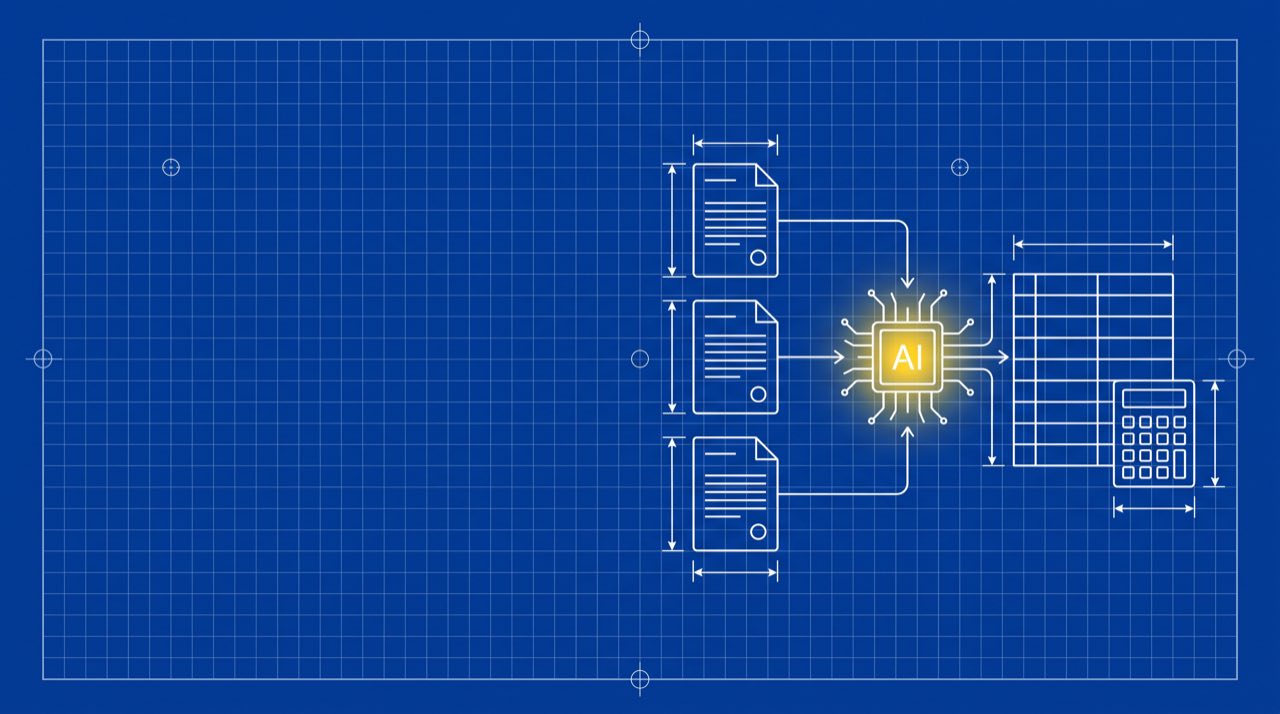
Accounting · bookkeeping and document workflow — AI implementation diagram
01Sound familiar?

Recognize your accounting department?

Monday, 10 am. You ask whether last month is closed. The answer: "Almost — still waiting on documents from suppliers." A week later it turns out the documents had been sitting in the shared inbox since the 3rd — scans, in an email with no subject line, wedged between a newsletter and the internet bill.

A manager sent a client an act with last year's company details, because he grabbed the template off his desktop. The client signed it, sent it back, and it went into the folder. The error surfaced in April — during the reconciliation before the annual report, by which point the client had already changed legal entities.

Your accountant spends two-thirds of the workday keying in what's already printed on a PDF that landed in the inbox: number, date, counterparty, amounts, rate. You're paying a specialist for their expertise and buying typing speed. And the moment they go on vacation, month-end close slips.

02The cost of inaction

How much you're losing while you read this page

It's easiest to see with your own numbers. An hour of your chief accountant's time costs more than an hour of a manager's, and that hour goes to retyping data out of PDFs into the accounting system. Add resubmitted reports, penalties on documents posted late, and the evenings you spend asking "why isn't this closed yet." Plug in your own figures.

Lost revenue per month per year —

A rough estimate based on your inputs — we calculate exact numbers in a free consultation.

Get this money back
03How it will be

Your 25th, one month after implementation

You open your phone on the evening of the 25th. One message: every source document for the month has been recognized and sorted, reconciliation against counterparties is complete, and seven line items with discrepancies are waiting for your accountant's attention — each one showing exactly where the difference lies. You don't message your chief accountant asking "how's it going." You open the dashboard and see how many documents arrived, how many were posted without corrections, and where things are stuck — and whose fault it is: the supplier didn't send it, the manager didn't attach it, the amount didn't match. Your accountant spends their time on what you actually pay them for: methodology, disputed transactions, conversations with counterparties. You go on vacation without carrying the feeling that your books run on one person's memory.

Now
Source documentsKeyed in by hand, some sit unposted in the inbox
Counterparty reconciliationOnce a quarter, in a rush, before filing
Staff questionsGo straight to the accountant and eat into their day
Visibility into the booksTaken on faith: "we're almost closed"
With AI
Source documentsRecognized and sorted on arrival day, full flow
Counterparty reconciliationContinuous, discrepancies listed with the exact difference
Staff questionsRoutine ones handled by an AI assistant, only edge cases reach the accountant
Visibility into the booksOnline: what arrived, what's posted, what's stuck
04How it works

Three steps, and you don't write a single line of code

  1. 01 · Step 1 · 14 days · ₽0

    We break down your document workflow

    We look at numbers, not impressions: how many documents arrive per month, through which channels, how long it takes to key in one invoice, and where discrepancies happen most often. This is often where an owner first sees that half the flow bypasses the accounting system entirely — sitting in the accountant's personal inbox and a manager's messenger app. The output is a document with your bottlenecks and a priority order: what to automate first.

  2. 02 · Step 2 · pilot from ₽90,000

    We launch a pilot on one segment

    We don't touch the whole accounting function at once. We take whatever hurts most — usually incoming document recognition and reconciliation against the accounting system — and launch it on your real document flow. AI reads the incoming file, pulls out the details, finds the counterparty and contract, checks the amounts, and hands the accountant a ready line item flagged with what to review. In parallel, we set up measurement: time per document, share posted without corrections, number of discrepancies.

  3. 03 · Step 3 · turnkey

    We scale across the whole accounting loop

    After the pilot, the decision is made on numbers. From there we connect the rest: an AI assistant for staff's routine questions about documents and expense reports, automatic collection of missing paperwork from counterparties, data prep for reporting forms, a dashboard of your books' status. Everything is handed over with instructions: your accountant changes the parsing rules and reference tables themselves.

05Proof

What it looks like in practice: control instead of manual reconciliation

Edemium case study · industrial equipment

A sales team for industrial equipment, 15 managers. Every deal means a contract, an invoice, shipping documents, an act. All of it flows into accounting, and the head of the department was spending around 10 hours a week just keeping tabs on it.

The request didn't sound like an accounting problem at first: "I don't understand what's happening in the department." The discovery process traced the confusion back to documents. Every evening, the department head was opening deals himself and checking what had shipped against what had been signed, because the summary arrived a week late and already had after-the-fact corrections in it.

The first thing that surfaced: some documents were traveling through managers' messengers and personal inboxes and reaching accounting one to two weeks late. Accounting wasn't working with the flow — it was working with whatever made it through. That's where the rush to the 25th came from, and the endless "still waiting on documents."

What we built: AI parses every incoming document and call tied to a deal, extracts the details and amounts, matches them against what's already posted, and flags discrepancies — shipped but no act; act exists but the amount is different; contract signed but no invoice issued. The department head's oversight shrank from 10 hours a week to 30 minutes, because now he's reviewing a list of exceptions instead of everything at once. 100% of calls and documents get reviewed — not a sample that someone got around to.

The side effect turned out to be financial: over two months the department added +27% to revenue — not because anyone got better at selling, but because deals stopped stalling in paperwork, and it became clear exactly where they were getting stuck.

"The most uncomfortable discovery is usually not about the AI. It turns out the documents weren't getting lost with the accountant — they just weren't reaching him."

A real Edemium case study: the control and revenue figures are actual results from this implementation. Yours will depend on your document volume, number of counterparties, and accounting system. We don't quote percentages before we've looked at your flow.

06While you're thinking it over

Every month of manual document processing, you pay twice

The first bill is in money: hours of a qualified accountant spent retyping data out of PDFs, penalties and amended filings from documents posted late, deductions you missed because an invoice was buried in an email thread. The second bill is paid in control, and it's heavier. As long as your books run on one person's memory, you can't audit them and you can't send that person on vacation without risking a blown close. You make decisions on numbers that are a month old — which means, in effect, blind. Every month of delay produces the same result: the same evenings on the 25th, the same "deal with it later" folder, the same dependence on one specialist.

07I know what you're thinking

Honest answers to the main objections

It's expensive. Easier to just hire another accountant for data entry

Compare it to the alternative. An accounting assistant on staff costs ₽60,000–90,000 a month plus taxes, a workstation, and training on your specifics. That's roughly a million a year, and the volume of documents one person can process in a day is physically capped. A pilot from ₽90,000 is a one-time cost for a system that handles the entire flow and works on December 30th. The real comparison isn't the cost of accounting staff — it's the cost of delays: a document posted late costs more than the document itself.

Will AI calculate our taxes? We're not doing that

Good — you shouldn't. Your accountant calculates taxes, and responsibility for reporting stays with them — AI is never given that authority. We automate the routine that happens before the calculation: recognizing the document, finding the counterparty and contract, matching amounts against what's posted, gathering missing paperwork, answering a manager's question about an expense report. The accountant ends up with prepared data and a list of discrepancies — and decides how to post it themselves.

We run a customized 1C setup, nothing plugs into it

A customized 1C is the norm, not the exception — off-the-shelf implementations in accounting are rare. We don't rewrite your system and we don't make you migrate: data exchange runs through native mechanisms — files, data exchange, API — with the setup you already have running. During the free automation map, we look at exactly what configuration you have, who maintains it, and which exchange method won't break your customizations. If integration would cost more than it delivers, we'll tell you outright.

Source documents and contracts are commercially sensitive. Where does the data go?

Financial documents are a strict-liability zone, and we work under Russia's 152-FZ data protection law. You choose the hosting environment: Russian servers, your own infrastructure, or a fully isolated environment with no external access. The model processes one document at a time and returns a result — it doesn't accumulate an archive of your source documents or take anything off-site. Access rights and the scope of processed data are documented before work starts.

Are we firing our accountant? A person should be running the books

What gets replaced is data entry, not the specialist. Methodology, disputed transactions, communication with the tax authority, and signing off on reports stay with a human — AI removes the mechanics: keying in details, hunting for a document in an email thread, matching amounts line by line. The time your accountant gets back goes toward what you actually pay them for: verifying accuracy, working with counterparties, preparing for audits. Clients come to us not to cut headcount, but because their accounting team is drowning in paperwork.

A risk-free pilot for you

We launch the pilot in 2 weeks. You set the success metric yourself. If you don't hit it, we refund the pilot. The risk is ours, not yours.

08Cost

What it costs and how to start

An accounting assistant for data entry: ₽60,000–90,000 a month plus taxes, a workstation, and vacation coverage. Roughly a million a year. Daily document volume is capped, and right at month-end close they can get sick or quit — taking their knowledge of your counterparties with them. A pilot of AI document processing: from ₽90,000, once. Handles the entire flow regardless of volume, and works over the holidays and the night before filing. Your accountant stays — but works on the books, not on data entry.
Consultation
0 ₽Process breakdown + ROI estimate
  • Funnel breakdown and loss points
  • Lost revenue calculated in rubles
  • An honest read on where AI pays off
Get it for free
StartScenario pilot
from 90,000 ₽Payback in 2–4 months
  • Automation map — ₽0, 14 days. We break down your document workflow and hand you a document: where your accounting team's time is going, what to automate first, and what it costs
  • Pilot — from ₽90,000. We take one segment (usually incoming document recognition and reconciliation against the accounting system), launch it, and measure it on your real documents
  • The pilot runs on live traffic, not demo files. You decide whether to continue based on numbers you saw yourself
Launch a pilot
Turnkey
Custom quoteFull stack + ongoing support
  • Turnkey — quoted individually after the automation map: the scope depends on document volume per month, number of legal entities, and depth of integration with your accounting system
  • Full loop: recognition of all incoming source documents, counterparty reconciliation, collection of missing paperwork, an AI assistant for routine staff questions, data prep for reporting forms, a dashboard of your books' status
  • Handed over with instructions and access rights: your accountant changes the parsing rules and reference tables themselves. Ongoing support is a separate arrangement, not a mandatory condition
Discuss your project
09FAQ

FAQ on AI for accounting teams

What accounting tasks can AI realistically take on right now?

Recognizing incoming source documents (invoices, delivery notes, acts, VAT invoices) and sorting them by counterparty and contract, reconciling documents against what's already posted in your accounting system, finding missing paperwork and requesting it from the counterparty, answering staff's routine questions about expense reports and documents, and preparing data for reporting forms. Tax calculation, methodology, and signing off on reports stay with the accountant — AI prepares the data, a human makes the decision.

Is AI document processing reliable? What happens with recognition errors?

The model reads the meaning of a document, not just a template: it understands that "Romashka LLC" in the header and "Supplier: Romashka" in the body are the same counterparty, even across different document formats. But the main reliability mechanism isn't recognition — it's reconciliation: every line item is matched against the contract and against what's already posted, and anything with a discrepancy or low confidence goes to the accountant as a separate review list. AI never posts documents silently — it prepares them and flags what to check.

We run a customized 1C setup. Is AI automation even possible in our configuration?

Usually yes, and you don't need to migrate anywhere. Data exchange runs through your configuration's native mechanisms — export/import, file exchange, API — without rewriting anything that already works. During the free automation map, we look at your specific configuration, who maintains it, and which exchange method is safe for your customizations. If integration would cost more than it delivers, we'll say so directly.

What do you need from us to get started?

Access to the channels documents arrive through (accounting inbox, EDI, a folder of scans), an understanding of your accounting system, and one person on your side who can answer process questions — usually your chief accountant. We handle the rest. The free automation map stage needs about an hour of your time.

What if the law or document formats change?

That's a routine update, not a rebuild. Document-parsing rules and reference tables live in settings, not hardcoded: your accountant can add a new document type or change fields and reconciliation conditions themselves. We show how and hand over the instructions at project delivery — there's no vendor lock-in here. Tracking regulatory changes stays with your accountant: AI runs on the rules you set.

Document processing speed — the one thing you can change in a month

In accounting, almost everything comes down to one number: how long a document takes to go from "arrived" to "posted." As long as that takes weeks, you're stuck with rushes on the 25th, amended filings, and management decisions made on stale numbers. This is a lever you can actually move: a document gets processed the day it arrives, discrepancies show up immediately instead of at quarterly reconciliation. You can rebuild this in a few weeks, and the result is visible in the very first close — in the share of documents posted without manual entry, and in what time your chief accountant gets to go home on the 25th.

I want to be first in my industry
10Connection point

Bookkeeping automation map — 14 days, ₽0

We'll break down your document workflow by the numbers: how many documents arrive, through which channels, how many hours go into manual entry, where discrepancies happen, and what each late posting costs. The output is a document: what to automate first, what pays off fastest, and what it costs. No obligation to continue.

Message on Telegram

Get a free consultation